FDA’s Order to Halt Psychedelic Research
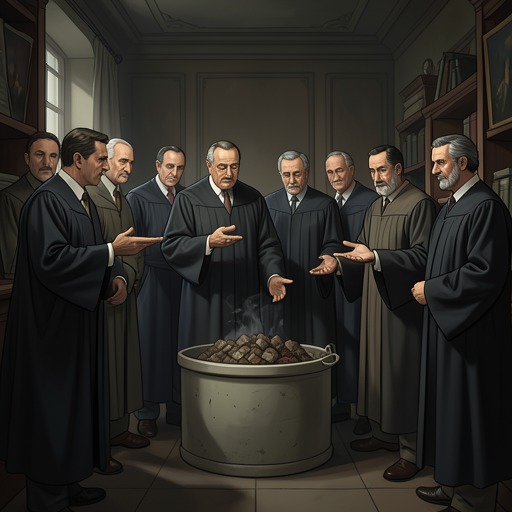
How to Change Your MindThe FDA’s Order to Halt Psychedelic Research was the decisive federal interruption of American psychedelic studies in 1966. It arrived amid a widening conflict over whether these drugs belonged within controlled medical research, represented a form of therapy built around spiritual experience, or had become inseparable from illicit use. The order closed virtually every U.S. program then underway, while one major research center continued for another decade.
Background: a contested therapeutic model
Earlier psychiatric models had made psychedelic drugs easier to accommodate within established medicine. The psychotomimetic model treated their effects as resembling psychosis; the psycholytic model used them as an adjunct to psychoanalysis. Psychedelic therapy made a more disruptive proposal: a single high-dose session might produce a conversion-like experience, requiring a reimagining of the usual roles of patient and therapist. Its spiritual dimensions also blurred familiar professional boundaries between religion and science, sickness and health, and healer and sufferer.
The treatment’s reliance on the surroundings and the therapeutic relationship deepened the dispute. Work by Humphry Osmond and Abram Hoffer suggested that an engaged, empathetic therapist and the conditions of a session could shape its course. Their Saskatchewan results helped make LSD widely regarded in North America as a promising treatment for alcohol addiction, and the provincial government supported making it a standard option. But a Toronto replication, designed to isolate the drug’s effects, placed volunteers in neutral rooms, limited clinicians’ engagement, and sometimes used restraints or blindfolds. Its results did not match the Saskatchewan trials, and some participants had terrifying experiences. The disagreement exposed a methodological fault line: the conditions that supporters considered essential to therapy were precisely the variables stricter experiments tried to remove.
The credibility problem was not confined to treatment studies. In the Concord Prison Experiment, Timothy Leary reported a striking reduction in recidivism among prisoners who received psilocybin, but a later subject-by-subject reconstruction by Rick Doblin found no statistically significant difference from the control group. Concerns about weak methods, researchers’ involvement with the drugs, and the public association of psychedelics with mystical or recreational experience made it increasingly difficult for advocates to distinguish legitimate research from the black market. At the 1966 Senate hearings, Leary and Sidney Cohen tried to defend that distinction; Senator Robert F. Kennedy also questioned why projects considered worthwhile months earlier should now be canceled. The effort did not change the outcome.
The order and the day the work stopped
In October, about sixty psychedelic researchers scattered across the United States received an FDA letter ordering them to stop their work. The order was not an abstract warning about future research: it could arrive at the threshold of a session already being prepared. James Fadiman, who was conducting creativity experiments at the International Foundation for Advanced Study in Menlo Park, recalled that the letter revoking the project’s FDA approval arrived just as he had finished dosing four participants chosen for their problem-solving ability.
Fadiman was reading the notice in the next room while the four men waited for their session. He proposed that his colleagues agree they had received the letter the following day. The delay lasted only until morning, but it marked the final session of the program: the Foundation’s research, along with virtually every other psychedelic research program then operating in the United States, shut down. The timing gave the regulatory decision an unusually concrete human scale. A research program was not merely being debated or defunded; its work was interrupted at the moment it was about to begin.
The exception and the institutional aftermath
The Maryland Psychiatric Research Center at Spring Grove survived the closures. Researchers there, including Stanislav Grof, Bill Richards, and Walter Pahnke, continued investigating psilocybin and LSD for alcoholism, schizophrenia, and the existential distress of cancer patients. The program lasted until 1976. Why it was allowed to continue remains uncertain. Former staff members rejected speculation that the center stayed open because powerful people in Washington were receiving therapy or seeking access to the drugs. They did confirm that its director, Albert Kurland, had strong federal connections and used them to keep the center operating and obtain LSD, including some from the government.
The shutdown also reflected a deeper mismatch between psychedelic therapy and the dominant standards for evaluating drugs. Double-blind, placebo-controlled trials had become the professional ideal, but participants and guides could often tell whether psilocybin had been administered. Researchers also struggled to separate a drug’s effects from the session environment, therapist involvement, and participants’ expectations. If the therapy worked partly by occasioning a particular kind of experience, isolating the molecule from those conditions risked removing part of the treatment being studied. These difficulties did not establish that the therapy worked; they complicated the methods by which its effects could be assessed.
Revival and the meaning of the interruption
When psychedelic therapy returned to clinical research decades later, investigators described themselves as taking up work abandoned under cultural pressure, while recognizing that its evidence had to be rebuilt under contemporary scientific standards. In December 2016, the New York University and Johns Hopkins University cancer studies were published together. Across the two small trials, about 80 percent of patients showed clinically significant reductions in anxiety and depression, and the benefits persisted for at least six months. The reported intensity of the mystical experience closely tracked symptom improvement. The results drew attention and calls for larger studies, but the trials involved only eighty people in total and did not establish a definitive cure.
A small Imperial College feasibility study offered another preliminary signal: among twelve participants with treatment-resistant depression, symptoms improved after a week, and two-thirds were depression-free; some benefits persisted at three months. The study had no control group, and its later expansion showed that some participants relapsed, suggesting that treatment might need to be repeated. Such findings renewed scientific interest without resolving the central questions about evidence, context, and therapeutic mechanism.
The order’s legacy is therefore both institutional and methodological. It ended nearly all sanctioned U.S. psychedelic research in 1966, leaving Spring Grove as a rare surviving center, and helped create the long gap that later researchers sought to bridge. The revival has not simply reinstated the earlier therapeutic claims: it has also had to confront the same tension that the shutdown made stark, between evaluating a drug as an isolated chemical and studying a therapy whose outcomes may depend on the experience, the guide, and the setting together.